Palm Kernel Shells (PKS)
High-calorific renewable biomass fuel for industrial boilers and power plants, and a clean, low-sulphur substitute for coal.
- Calorific value close to low-grade coal, at a fraction of the emissions
- Sulphur below 0.1%, so SOx output is negligible
- Naturally low moisture, no pre-drying or pelletising required
About Palm Kernel Shells
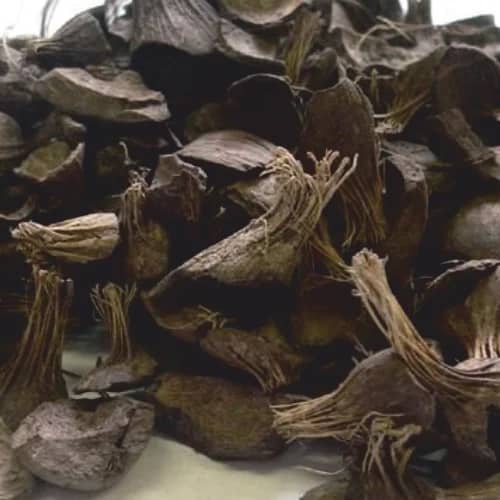
Palm kernel shells are the hard fragments left after the kernel is cracked out of the palm nut. They are dense, naturally low in moisture and high in fixed carbon, which gives them a calorific value of roughly 4,200 to 4,500 kcal/kg. That is comfortably the best-performing solid biomass to come out of palm processing, and close enough to low-grade coal to substitute for it directly.
That substitution is now a large international trade. Power utilities and industrial steam users in Japan, South Korea, Europe and increasingly the Middle East co-fire PKS with coal or run it as a standalone biomass fuel, driven by renewable energy mandates and carbon pricing. Because PKS is a genuine residue rather than a purpose-grown crop, it carries a strong sustainability case and generally qualifies under biomass certification schemes.
The technical advantages over other biomass are practical ones. Sulphur content is below 0.1%, so SOx emissions are negligible. Moisture is naturally low, so it needs no drying before combustion. It is uniform, free-flowing and dense, so it handles, stores and conveys like a mineral fuel rather than like loose agricultural waste, and it does not need pelletising to be shippable.
iFlowdeck supplies PKS screened and sieved to remove fibre, dust and kernel residue, sized for boiler feed systems, and loaded in bulk or in jumbo bags. We test calorific value, moisture, ash and sulphur per consignment, and can arrange the sustainability documentation buyers need for renewable energy compliance in their market.
Typical export specification
| Parameter | Value |
|---|---|
| Gross calorific value | 4,200 – 4,500 kcal/kg (17.5 – 18.8 MJ/kg) |
| Moisture | 10 – 12% max |
| Ash content | 3 – 5% |
| Sulphur | 0.1% max |
| Fixed carbon | 18 – 20% |
| Particle size | 5 – 15 mm (screened) |
| Foreign matter / fibre | 3% max after sieving |
| Bulk density | approx. 620 kg/m³ |
| Packaging | Bulk in container liner or 1 MT jumbo bags |
| Minimum order | 1 × 20 ft FCL (approx. 25 MT) |
| HS code | 1404.90.00 |
| Incoterms | FOB, CFR, CIF (DAP by arrangement) |
| Port of loading | Apapa & Tin Can Island, Lagos; Onne, Rivers State |
| Inspection | SGS, Bureau Veritas or Intertek pre-shipment analysis |
Indicative specification. Final parameters are confirmed per contract and verified by an independent pre-shipment analysis before loading.
Applications & industries
- Industrial boiler fuel and process steam generation
- Biomass and co-firing power plants
- Cement, ceramics and brick kiln firing
- Activated carbon manufacturing
- Charcoal and briquette production
- Road surfacing aggregate and landscaping mulch
Why source it from iFlowdeck
- Calorific value close to low-grade coal, at a fraction of the emissions
- Sulphur below 0.1%, so SOx output is negligible
- Naturally low moisture, no pre-drying or pelletising required
- Screened and sized for automated boiler feed systems
- A true processing residue, with a strong renewable sustainability case
Palm Kernel Shells: frequently asked
How does PKS compare with coal as a boiler fuel?
What size and screening do you supply?
Can you provide sustainability documentation?
How should PKS be stored?
Buyers of this also source
Ready to order Palm Kernel Shells?
Send us your volume, destination port and Incoterm. We will confirm the specification, availability and a firm price.