Palm Kernel Cake (PKC)
Protein-rich by-product of kernel crushing, and an economical, energy-dense feed ingredient for cattle, poultry, fish and swine.
- Competitive cost per unit of protein against soybean and copra meal
- Residual oil adds metabolisable energy to the ration
- Moisture controlled at loading to prevent caking and mould in transit
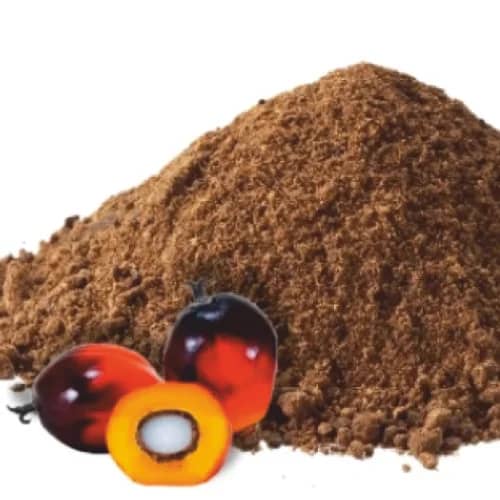
About Palm Kernel Cake
Palm kernel cake, also traded as palm kernel expeller or PKE, is what remains after oil is pressed from the palm kernel. It is a coarse, fibrous meal carrying 14–18% crude protein and residual oil, and it has become a staple energy and protein source in compound feed across Europe, Asia and the Middle East.
Its economics are what drive demand. On a cost-per-unit-protein basis PKC competes directly with soybean meal and copra cake while typically trading at a discount, and its residual oil content adds metabolisable energy that pure protein meals do not. For ruminant nutrition in particular, the fibre structure is an asset rather than a limitation, and dairy and beef producers use it at high inclusion rates.
Inclusion rates differ by species. Ruminants tolerate PKC well and it is commonly used at 30% and above in dairy and beef rations. Poultry and swine diets take lower inclusion, typically 5–15%, because the fibre and mannan content limits digestibility for monogastrics. Aquaculture feed formulators use it as a partial replacement for more expensive protein sources in tilapia and catfish diets.
iFlowdeck supplies PKC in 50 kg polypropylene bags and in bulk, with moisture controlled at loading to prevent caking and mould in transit, which is a real risk on long ocean routes if the material ships wet. Every consignment is sampled for protein, fibre, oil, moisture and aflatoxin, and we ship with the analysis certificate feed buyers need for their own quality systems.
Typical export specification
| Parameter | Value |
|---|---|
| Crude protein | 14 – 18% |
| Crude fibre | 16% max |
| Crude fat / residual oil | 6 – 10% |
| Moisture | 10% max |
| Ash | 4 – 6% |
| Metabolisable energy (ruminant) | approx. 11 MJ/kg DM |
| Aflatoxin B1 | 20 ppb max |
| Packaging | 50 kg PP bags or bulk in container liner |
| Minimum order | 1 × 20 ft FCL (approx. 25 MT) |
| HS code | 2306.60.00 |
| Incoterms | FOB, CFR, CIF (DAP by arrangement) |
| Port of loading | Apapa & Tin Can Island, Lagos; Onne, Rivers State |
| Inspection | SGS, Bureau Veritas or Intertek pre-shipment analysis |
Indicative specification. Final parameters are confirmed per contract and verified by an independent pre-shipment analysis before loading.
Applications & industries
- Dairy and beef cattle rations
- Poultry compound feed
- Swine finisher diets
- Aquaculture feed for tilapia and catfish
- Sheep and goat concentrate blends
- Organic fertiliser and soil conditioner blends
Why source it from iFlowdeck
- Competitive cost per unit of protein against soybean and copra meal
- Residual oil adds metabolisable energy to the ration
- Moisture controlled at loading to prevent caking and mould in transit
- Tested for protein, fibre, oil, moisture and aflatoxin per consignment
- Bagged or bulk loading to suit your handling setup
Palm Kernel Cake: frequently asked
What inclusion rate should we use for palm kernel cake?
Is palm kernel cake the same as palm kernel expeller?
How should PKC be stored on arrival?
Do you test for aflatoxin?
Buyers of this also source
Ready to order Palm Kernel Cake?
Send us your volume, destination port and Incoterm. We will confirm the specification, availability and a firm price.