Palm Empty Fruit Bunches (EFB)
Fibrous mill residue repurposed for biomass energy, mulching, composting and organic fertiliser production.
- Renewable energy feedstock from a true processing residue
- Naturally high in potassium, so it carries real fertiliser value
- Supplied shredded or baled, dried to your target moisture
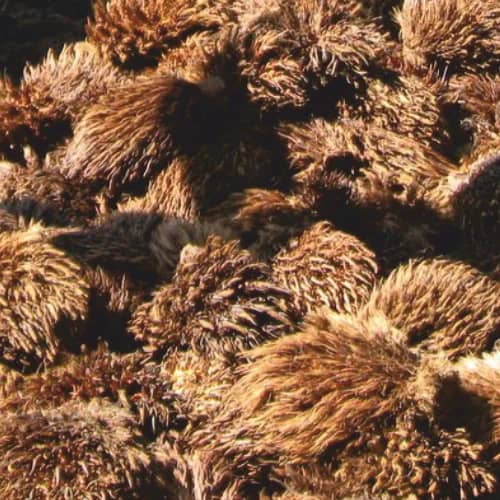
About Empty Fruit Bunches
Empty fruit bunches are the stalks left after fresh fruit bunches have been sterilised and stripped of their fruit. A palm mill generates a substantial tonnage of them, and for decades most of it was burned off or dumped. Treated properly, EFB is a genuinely useful fibrous biomass with three distinct markets: energy, agriculture and materials.
As fuel, dried and shredded EFB burns in biomass boilers at roughly 18.8 MJ/kg on a dry basis. Its high moisture at source means it needs drying or press-dewatering first, which is why it typically serves mills and plants close to the source or ships as processed fibre rather than raw bunches. Where that drying step is available, it is an inexpensive renewable fuel.
In agriculture the case is stronger still. EFB is rich in potassium, and applied as mulch it suppresses weeds, conserves soil moisture and returns nutrients directly to the plantation. Composted, it becomes an organic fertiliser that reduces synthetic input costs. Both uses close the nutrient loop on the plantation rather than exporting fertility off it.
Beyond energy and soil, EFB fibre feeds a growing materials sector: pulp and paper, fibreboard, biodegradable packaging, erosion-control matting and mattress and upholstery filling. iFlowdeck supplies EFB as shredded fibre or baled material, dried to the moisture level your application needs, and we will quote against your specific end use because the processing requirement differs sharply between a boiler and a fibreboard line.
Typical export specification
| Parameter | Value |
|---|---|
| Moisture (as received) | 55 – 65% |
| Moisture (dried fibre) | 10 – 15% |
| Calorific value (dry basis) | approx. 18.8 MJ/kg |
| Ash content | 5 – 7% |
| Potassium (K₂O, dry) | 2 – 3% |
| Cellulose content | approx. 45% |
| Form | Shredded fibre, baled or loose |
| Packaging | Compressed bales or bulk in container liner |
| Minimum order | 1 × 40 ft FCL (volume dependent) |
| HS code | 1404.90.00 |
| Incoterms | FOB, CFR, CIF (DAP by arrangement) |
| Port of loading | Apapa & Tin Can Island, Lagos; Onne, Rivers State |
| Inspection | Per-lot moisture and calorific analysis |
Indicative specification. Final parameters are confirmed per contract and verified by an independent pre-shipment analysis before loading.
Applications & industries
- Biomass boiler fuel and co-firing
- Plantation mulching and soil moisture retention
- Organic compost and potassium-rich fertiliser
- Pulp, paper and fibreboard manufacturing
- Biodegradable packaging and moulded fibre products
- Erosion control matting and horticultural substrate
Why source it from iFlowdeck
- Renewable energy feedstock from a true processing residue
- Naturally high in potassium, so it carries real fertiliser value
- Supplied shredded or baled, dried to your target moisture
- Diverts mill waste from burning and dumping
- Quoted against your end use, since processing needs differ sharply
Empty Fruit Bunches: frequently asked
Why does EFB moisture matter so much?
How is EFB used as fertiliser?
What form do you ship EFB in?
Buyers of this also source
Ready to order Empty Fruit Bunches?
Send us your volume, destination port and Incoterm. We will confirm the specification, availability and a firm price.