Palm Fatty Acid Distillate (PFAD)
High free-fatty-acid co-product of palm refining, and a valuable feedstock for biodiesel, soap, animal feed and oleochemicals.
- 80 to 95% free fatty acid, which makes it a concentrated and efficient feedstock
- A refining co-product, which supports residue-based renewable accounting
- Priced well below refined oils for the same fatty acid delivery
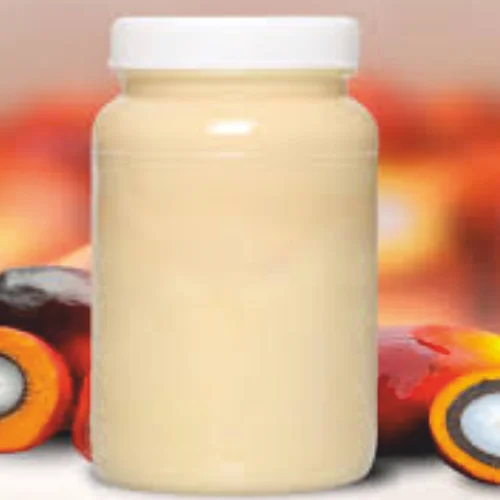
About Palm Fatty Acid Distillate
PFAD is the distillate captured during the deodorisation stage of palm oil refining. Steam stripping under vacuum removes the free fatty acids, and the condensed material collected from that stream is PFAD: a light brown, semi-solid mass at room temperature that is roughly 80–95% free fatty acid, mostly palmitic and oleic, with a minor fraction of vitamin E and phytosterols.
It is a co-product, not a waste, and its value has climbed steadily. Around 3–5% of every tonne of crude palm oil refined ends up as PFAD, and international demand from biodiesel producers in particular has made it a traded commodity in its own right rather than a refinery disposal problem.
Biodiesel is now the dominant outlet. PFAD's very high FFA suits acid-catalysed esterification, and in jurisdictions that treat it as a residue it can attract favourable renewable fuel accounting. Soap manufacturers saponify it directly. Oleochemical plants split it into fatty acids and glycerine as the entry point to a wide derivative range. Animal feed formulators use it as a concentrated energy source, and it also feeds vitamin E and phytosterol extraction for the nutraceutical sector.
iFlowdeck supplies PFAD in bulk flexitanks, ISO tanks and drums, shipped heated where the route and season require it. Consignments are tested for free fatty acid, moisture, saponification value and total fatty matter, and we quote against the actual analysis of the lot you will receive.
Typical export specification
| Parameter | Value |
|---|---|
| Free Fatty Acid (as palmitic) | 80 – 95% |
| Total fatty matter | 95% min |
| Moisture & Impurities | 0.5% max |
| Saponification value | 200 – 210 mg KOH/g |
| Iodine Value (Wijs) | 48 – 58 |
| Melting point | 47 – 52 °C |
| Colour | Light to medium brown |
| Packaging | Flexitank, ISO tank or 200 L steel drums |
| Minimum order | 1 × 20 ft FCL (approx. 20 MT) |
| HS code | 3823.19.00 |
| Incoterms | FOB, CFR, CIF (DAP by arrangement) |
| Port of loading | Apapa & Tin Can Island, Lagos; Onne, Rivers State |
| Inspection | SGS, Bureau Veritas or Intertek pre-shipment analysis |
Indicative specification. Final parameters are confirmed per contract and verified by an independent pre-shipment analysis before loading.
Applications & industries
- Biodiesel production via acid esterification
- Soap and detergent manufacturing
- Fatty acid and glycerine splitting
- Animal feed energy concentrate
- Vitamin E and phytosterol extraction
- Candle, lubricant and industrial chemical manufacture
Why source it from iFlowdeck
- 80 to 95% free fatty acid, which makes it a concentrated and efficient feedstock
- A refining co-product, which supports residue-based renewable accounting
- Priced well below refined oils for the same fatty acid delivery
- Shipped heated where route and season require it
- Quoted against the tested analysis of your actual lot
Palm Fatty Acid Distillate: frequently asked
What exactly is PFAD and where does it come from?
Why is PFAD popular for biodiesel?
Is PFAD suitable for food use?
Buyers of this also source
Ready to order Palm Fatty Acid Distillate?
Send us your volume, destination port and Incoterm. We will confirm the specification, availability and a firm price.