Buyers new to palm frequently ask for a price on "palm oil" and are surprised to receive two, several hundred dollars a tonne apart. The gap is refining, and whether it is worth paying for depends entirely on what happens to the oil next in your plant.
What crude palm oil actually is
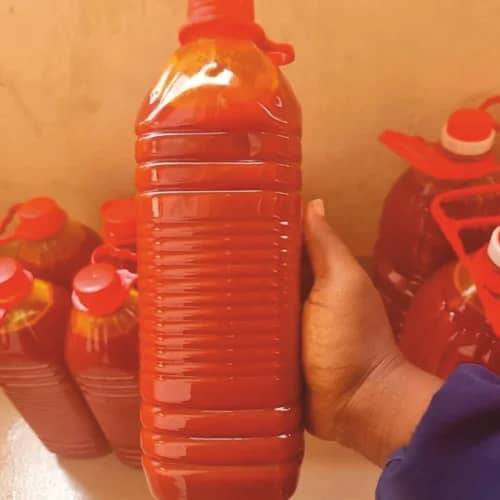
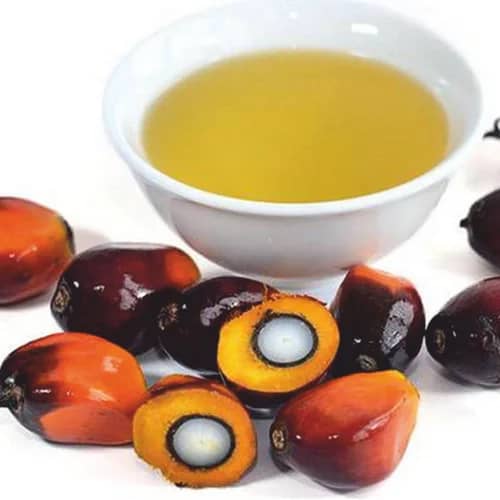
Crude palm oil is the oil pressed from the orange fruit pulp of the oil palm, clarified and nothing more. It is deep red, because of the carotene, the same pigment that makes carrots orange. It also carries a distinct aroma, natural vitamin E and typically up to 5% free fatty acid.
Everything that makes CPO cheaper also makes it unsuitable for direct use in most food manufacturing. The colour carries through into the finished product. The aroma is noticeable. The free fatty acid content affects smoke point and shelf life.
What refining removes
Refining takes CPO through four stages:
- Degumming removes phospholipids and gums
- Neutralisation strips free fatty acids down to around 0.1%
- Bleaching removes colour bodies, including the carotene
- Deodorisation steam-strips the volatile compounds that carry aroma and flavour
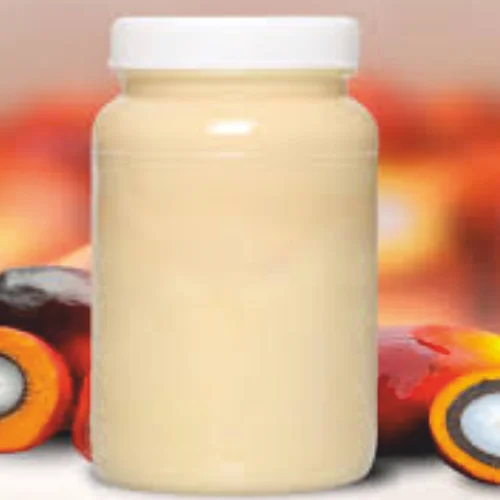
The result is refined, bleached and deodorised palm oil, RBD for short. It comes out pale gold, flavour-neutral and oxidatively stable, and it is the workhorse fat of global food manufacturing.
The by-products of refining are traded commodities in their own right. The free fatty acids stripped during deodorisation become PFAD, and the harder fraction separated afterwards becomes palm stearin. Nothing is wasted.
Which one do you need?
Buy CPO if: you operate a refinery, you are producing biodiesel or oleochemicals, you make soap or detergents, or you are formulating animal feed. In all of those the colour and FFA either do not matter or are actively useful, so you would be paying for refining that you then undo.
Buy RBD if: you are manufacturing food, cosmetics or anything where the finished product's colour, taste and shelf life matter. Frying oils, margarine, shortening, biscuits, instant noodles, soap noodles for personal care and retail cooking oil all take RBD.
The test is simple. Does anything downstream in your process remove colour and odour? If yes, buy crude. If no, buy refined.
The specifications side by side
| Parameter | Crude (CPO) | Refined (RBD) |
|---|---|---|
| Free fatty acid | 5% max | 0.1% max |
| Moisture & impurities | 0.5% max | 0.1% max |
| Colour | Deep red | 3.0 Red max (Lovibond) |
| Aroma | Distinct | Neutral |
| Carotene | Retained | Removed |
Both have the same melting behaviour, semi-solid at room temperature and fully liquid around 33 to 39 °C, because refining does not change the triglyceride structure.
A note on shipping
Both grades ship the same way, heated, in flexitanks, ISO tanks or steel drums, and both need a reheat protocol at the destination. Buying refined simplifies the processing, not the logistics.
The economics of the decision
The refining premium is real but modest relative to the cost of running a refining step yourself. If your volume does not justify a refinery, buying RBD is almost always cheaper than buying CPO and outsourcing the refining. If you already operate one, buying CPO and refining in-house captures the margin, and it gives you the PFAD and stearin streams as saleable co-products.
The mistake that costs money is buying RBD and then putting it through a process that would have tolerated crude perfectly well. That happens more often than it should, usually because "refined" sounded like the safer choice.