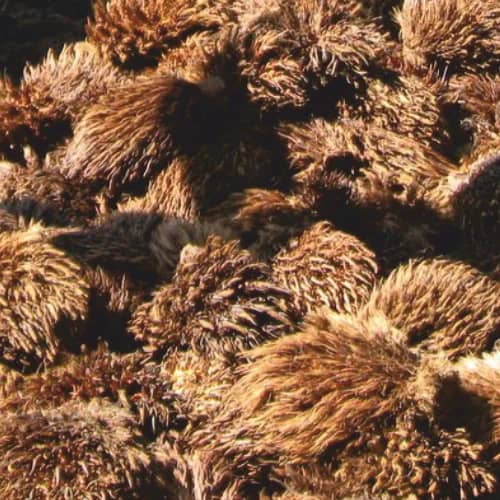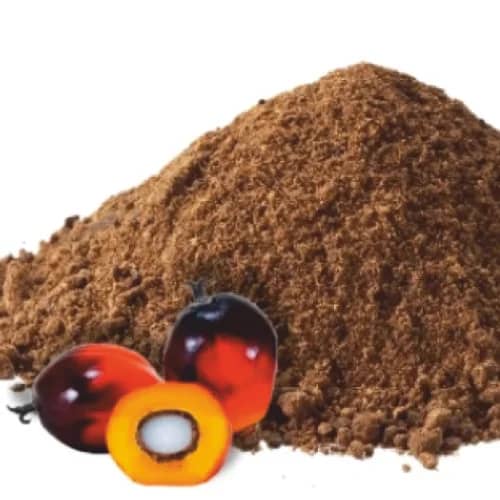
Palm kernel cake is what remains after oil is pressed from the palm kernel. It is a coarse, fibrous meal at 14 to 18% crude protein with 6 to 10% residual oil, and it has become a staple energy and protein source in compound feed across Europe, Asia and the Middle East.
The economic case
On cost per unit of protein, PKC competes directly with soybean meal and copra cake while typically trading below both. The residual oil adds metabolisable energy that a defatted protein meal does not bring, so a ration built around PKC frequently needs less added fat.
That combination of protein and energy in one ingredient, at a discount, is why demand has grown steadily rather than cyclically.
Where the constraint sits
PKC's limitation is fibre and mannan content, and it affects species very differently.
Ruminants handle it well. Cattle, sheep and goats have the rumen microflora to ferment the fibre productively. Dairy and beef rations commonly include PKC at 30% and above, and some intensive systems go higher. For a ruminant nutritionist it is close to an ideal supplementary ingredient.
Monogastrics need restraint. Poultry and swine cannot digest the fibre efficiently, and the mannans interfere with nutrient absorption. Practical inclusion is 5 to 15%. Push beyond that and feed conversion deteriorates enough to erase the cost saving.
Aquaculture sits in between. Tilapia and catfish diets use PKC as a partial replacement for more expensive protein at moderate inclusion. Enzyme supplementation, specifically mannanase, improves tolerance meaningfully in both aquaculture and monogastric diets.
If you are formulating for poultry or swine and want higher inclusion, the enzyme route is well established and usually pays for itself. It does not remove the ceiling, but it does raise it.
Expeller versus solvent-extracted
Two extraction methods produce two slightly different products:
- Palm kernel expeller (PKE) is mechanically pressed and retains more residual oil, typically 8 to 10%. Higher energy, marginally lower protein.
- Solvent-extracted cake has oil down around 2 to 3%. Lower energy, marginally higher protein, and it stores better because less oil means less rancidity risk.
Neither is better in the abstract. If you are formulating to an energy target, expeller helps. If you are formulating to protein and adding fat separately, solvent-extracted is cleaner. Confirm which one you are quoting on, because traders often use the names interchangeably.
What to specify
- Crude protein: 14 to 18%
- Crude fibre: 16% maximum
- Crude fat: 6 to 10% for expeller
- Moisture: 10% maximum, and this one matters more than it looks
- Ash: 4 to 6%
- Aflatoxin B1: 20 ppb maximum
Why moisture is the parameter to police
PKC loaded wet will cake and mould on a long ocean voyage. A container that leaves at 14% moisture can arrive as a solid, partially spoiled mass, and by then there is no remedy.
Ten percent maximum at loading is the standard for a reason. Ask for the loading moisture result specifically rather than the certificate average, and store the material dry and ventilated on arrival.
Beyond feed
PKC has a second market as an organic fertiliser and soil conditioner, where its nitrogen and potassium content and slow breakdown suit tree crops and horticulture. That outlet is smaller, but it is useful when feed demand softens.
The practical summary
If you formulate ruminant rations, PKC is one of the better-value ingredients available and you can use a lot of it. If you formulate poultry or swine feed, it is a useful moderate-inclusion ingredient with a real ceiling. Either way, moisture is the specification to defend, and the question to ask your supplier is which extraction method produced the lot you are buying.